If you landed on this page, there's a 90% chance you just received the email — the one that starts with "After a recent review of your account activity…" and ends with your PayPal balance frozen for 180 days. Maybe your shop sells IPTV subscriptions. Maybe SaaS to gambling affiliates. Maybe peptides, CBD, or adult content. Whatever it is, PayPal's risk model decided you're no longer welcome — and there is no realistic path back.
This guide is the 2026 playbook for moving on. We compare every serious PayPal alternative for high-risk merchants, explain why card-to-crypto gateways structurally dominate the category, and walk through the practical migration — from checkout buttons to webhooks — so you can be back to collecting payments by tomorrow.
1. Introduction: Why You're Reading This
PayPal's Acceptable Use Policy lists more than two dozen prohibited business categories. The list isn't exotic: it includes online gambling, adult services, most regulated supplements, IPTV resale, certain forex products, multi-level marketing schemes, certain crypto exchanges, and any business with chargeback ratios above roughly 1%.
The trigger for enforcement is almost always the same: volume. A high-risk merchant flies under the radar at $2K/month, gets reviewed at $20K/month, and gets terminated at $200K/month. The risk team only investigates when the upside (commission revenue) is worth the downside (potential chargeback liability) — and by the time they show up, it's already too late to negotiate.
The lesson, learned the hard way by tens of thousands of high-risk merchants since 2020, is that you cannot scale a high-risk business on PayPal. Moving to a real PayPal alternative is not optional. It's the cost of survival.
2. Why PayPal Bans High-Risk Merchants
Understanding why PayPal bans high-risk accounts is the first step to picking a gateway that can't do the same thing to you. There are five structural reasons:
1. PayPal Holds Your Funds — That's Their Business Model
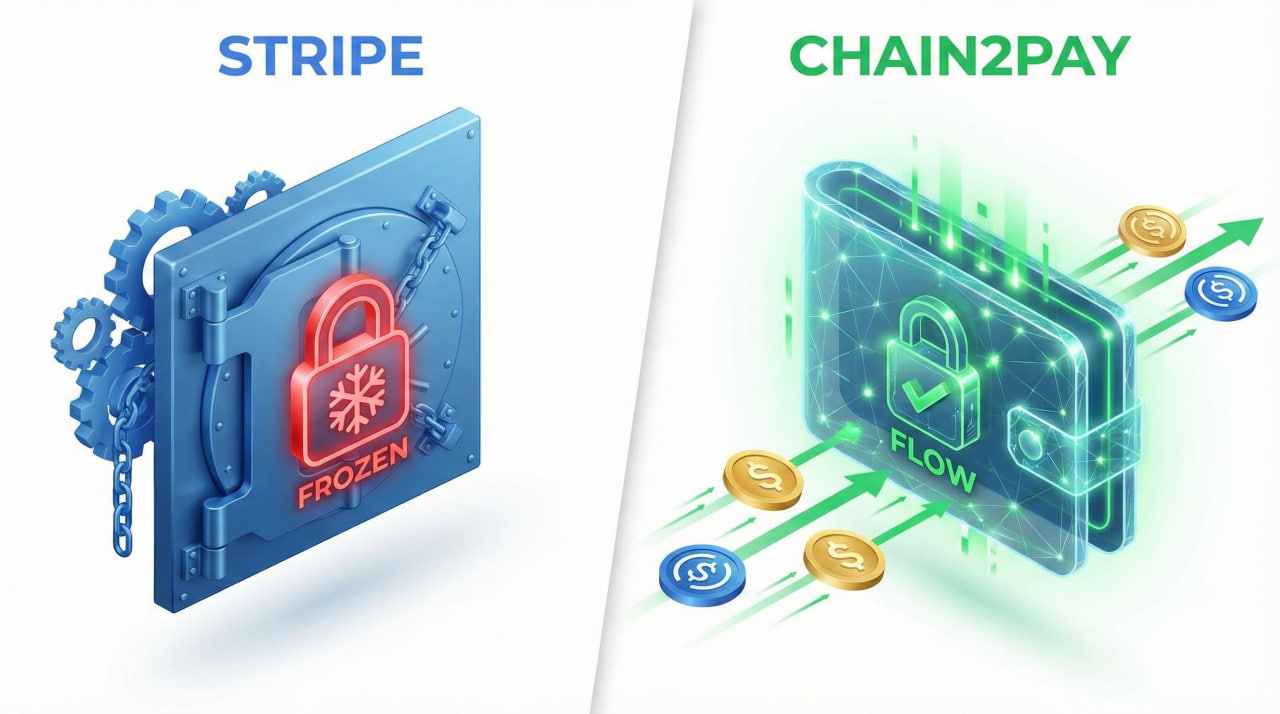
PayPal is technically a money transmitter. They custody every dollar that flows through your account, sometimes for days, sometimes for 180 days. Custody equals exposure to chargebacks, fraud, and regulatory action — and that's why their risk team obsesses over "what kind of business is this?" before letting funds settle.
2. Chargeback Ratios in High-Risk Verticals Are Structurally High
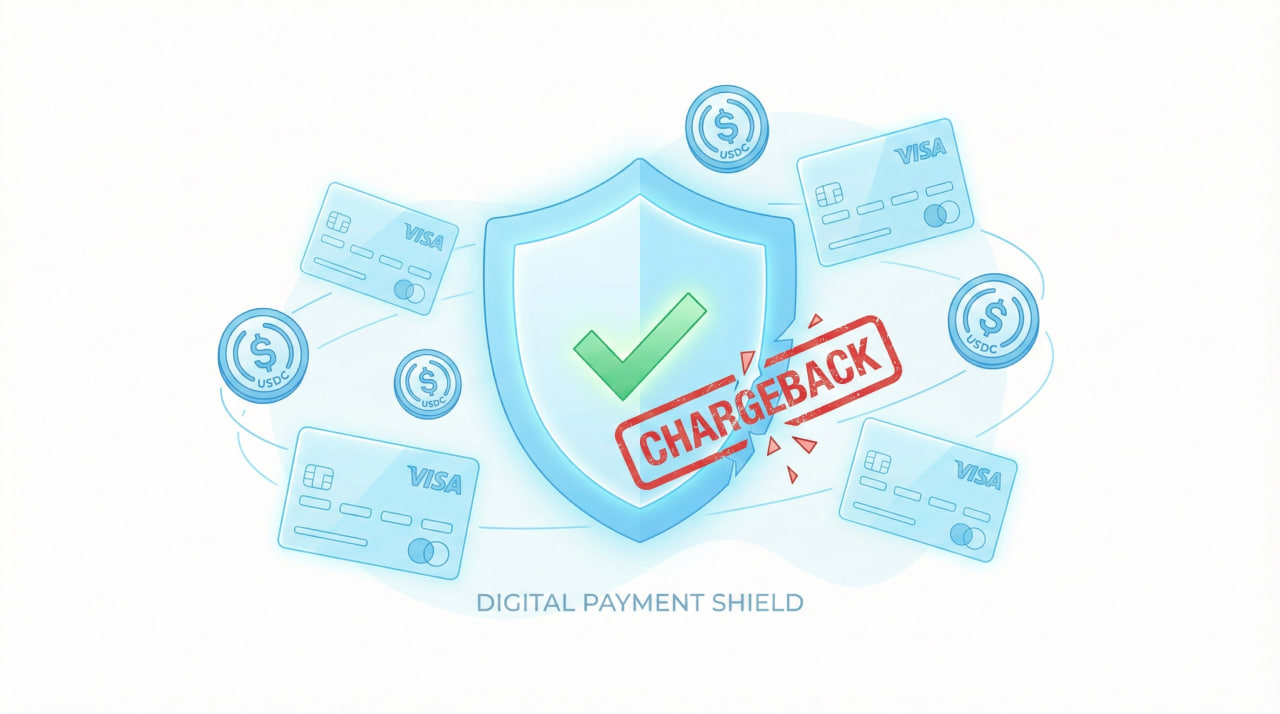
IPTV, adult subscriptions, online gambling, forex deposits and impulse-buy supplements all generate chargeback ratios well above the Visa 0.9% / Mastercard 1% line. PayPal doesn't want to negotiate fees with the card networks on your behalf — they simply offload the risk by terminating you.
3. Acquiring Banks Force PayPal's Hand
PayPal doesn't actually issue Visa/Mastercard authorizations themselves — they sit on top of acquiring banks. When those banks tighten their high-risk policies (as happened in late 2025 across most US-based acquirers), PayPal has no choice but to propagate the restriction down to merchants.
4. Subscription & Recurring Billing Trip the Risk Model
The mere fact that you bill the same card monthly is a yellow flag. SaaS, IPTV access, adult site memberships and gambling subscriptions all share the same problem: the customer can dispute six months of charges in a single click, and the merchant (you) eats every one of them.
5. Geographic and Regulatory Drift
International customers, mixed currencies, MENA / SEA / LATAM card mixes — all push your "cross-border" risk score upward. PayPal has territorial risk caps and the moment you cross them, the account becomes unviable from the risk team's perspective.
Notice the common thread: every one of these failure modes requires a merchant account in the loop. Take the merchant account out, and four of the five structural reasons evaporate.
3. What PayPal Restrictions Cost You
Before evaluating alternatives, it's worth pricing what staying on PayPal actually costs once you're flagged as high-risk. The hidden costs are bigger than the transaction fee:
- 180-day rolling reserve. 5-10% of every transaction held for 6 months. On a $50K/month business, that's $25K-$50K of your own working capital permanently parked in PayPal's account.
- Frozen funds at termination. When the ban hammer lands, every dollar that hasn't already cleared the rolling reserve is locked for 180 days. Your ad budget evaporates overnight.
- Chargeback liability. $20-$30 per chargeback fee, on top of the refunded amount. High-risk verticals routinely see 2-5% chargeback rates — that's another 1-2% of revenue gone.
- Lost conversion at checkout. Every time PayPal silently declines a high-risk transaction at the risk-engine layer, you lose the customer. Decline rates of 15-25% are not unusual for IPTV, gambling and adult.
- Migration cost when you're finally banned. Setting up a new processor, re-integrating, re-doing the checkout, refunding outstanding subscriptions, losing recurring customers who have to re-enter cards — easily 2-4 weeks of revenue.
The total cost of staying on PayPal as a high-risk merchant typically lands somewhere between 10-15% of gross revenue once you stack the headline fee, the rolling reserve interest cost, the chargeback fees and the periodic migration cost. That's a number worth fixing.

4. The PayPal Alternatives Compared
There are four credible categories of PayPal alternative for a high-risk merchant in 2026. Each fits a different business model:
Card-to-Crypto Gateways (Chain2Pay)
Customer pays with Visa, Mastercard, Apple Pay or Google Pay. The gateway routes the payment through a card-acquiring partner and then forwards USDC on Polygon to the merchant's wallet within minutes. There is no merchant account in the loop, no rolling reserve, no chargeback liability on the crypto side. Approval takes about 2 minutes and there is no merchant KYC.
Best for: IPTV, casino, forex, CBD, adult, SaaS, peptides, digital keys, and any business that wants both card-checkout conversion and irreversible payout.
Specialist High-Risk Acquirers (PaymentCloud, Durango, eMerchantBroker)
Traditional Visa/Mastercard merchant account underwritten for high-risk verticals. Real card processing on a real bank rail, but with full KYC, 1-4 weeks of underwriting, 5-10% rolling reserve and standard chargeback exposure. Pricing is custom and usually higher than mainstream processors.
Best for: established US merchants in legal high-risk categories who want a long-term banking relationship and don't mind the underwriting burden.
Crypto-Only Processors (NOWPayments, BitPay)
The customer must already hold crypto to pay. No card processing, no fiat on-ramp. Settlement is instant on-chain. No KYC for the merchant.
Best for: NFT projects, DeFi tooling, Web3 SaaS — businesses where the customer base is already crypto-native. Fundamentally not a fit if your audience is a non-crypto consumer.
Offshore PSPs (ePayservice, 2Checkout offshore tier)
Card processing on offshore acquiring banks. Higher fees (4-8%), slower settlement (T+7 to T+14), heavier compliance documentation, and exposure to acquirer-side terminations that mirror PayPal's behavior at a smaller scale.
Best for: established merchants who specifically need fiat settlement in EU bank accounts and accept the operational overhead.
For most high-risk merchants reading this article — i.e. anyone who got banned by PayPal and needs to be live again this week — the card-to-crypto category is the only one that solves the underlying problem. The rest still rely on a merchant account that can be revoked.
5. Why Chain2Pay Is the Strongest PayPal Alternative
Chain2Pay was built specifically to solve the "banned by PayPal" problem. It's not a general-purpose Stripe-style gateway — it's a high-risk-first payment infrastructure with five structural advantages over PayPal:
- No merchant account to terminate. Funds settle directly into your non-custodial Polygon wallet. There's nothing PayPal-style for a risk team to freeze.
- Instant USDC settlement. Card approved → USDC in your wallet within minutes. No 180-day rolling reserve, no T+5 batch.
- No merchant KYC. Account creation in 2 minutes, business email plus Polygon wallet address. Compare to PayPal's full business verification.
- 2.5%-6% transparent pricing. Flat per-transaction fee with no hidden chargeback surcharges, no monthly minimums, no setup fees.
- Card-checkout conversion. Customers see Visa/Mastercard/Apple Pay/Google Pay just like on PayPal Smart Buttons. The crypto layer is entirely invisible to them.
The user experience for your customer is essentially indistinguishable from a PayPal checkout. The user experience for you is fundamentally different: there is nobody between you and your money, ever. The same model is what we explore in depth in our deep-dive on the best card-to-crypto payment gateways and on the best chargeback-free payment gateways.
6. Migration Playbook (PayPal → Chain2Pay)
For most high-risk merchants, migrating from PayPal to Chain2Pay is a 1-day project, often shorter for stores already running on WooCommerce or WHMCS. Here's the sequence we recommend:
- Create your Chain2Pay account at dashboard.chain2pay.cloud — 2 minutes, no documents.
- Add your Polygon wallet as the settlement address. If you don't have one yet, MetaMask or Trust Wallet take 60 seconds to set up.
- Generate API keys for sandbox + live. Sandbox lets you test the entire flow without spending a single USDC.
- Install the WooCommerce plugin (one click) or the WHMCS module, or integrate the REST API in 50 lines of code. We have a step-by-step guide in Integrate a High-Risk Gateway with E-commerce.
- Replace PayPal Smart Buttons with Chain2Pay payment links in your checkout, your billing emails, and your customer portal.
- Notify recurring customers that their next charge will go through a new processor — most will simply re-authorize on the new gateway with one click.
- Listen for the merchant callback on your
callback_url. Chain2Pay fires an HTTP GET when an order is paid, with the order id, amount, on-chain tx hash and provider in the query string — plus anx-chain2pay-signatureHMAC-SHA256 header (when a webhook secret is configured) so you can verify authenticity before triggering fulfillment.
Once live, Chain2Pay's dashboard gives you the same kind of analytics PayPal used to: revenue, refunds, chargebacks (rare on the crypto side), customer LTV, provider mix, and a real-time PolygonScan link for every settlement.
For deeper context on cleaning up the residual PayPal chargebacks during the transition, see our chargeback prevention guide and accept payments without a bank account for the wallet-only setup pattern.

7. Frequently Asked Questions
Why does PayPal ban high-risk merchants?
PayPal's risk model treats subscriptions, intangible goods, regulated verticals (IPTV, adult, gambling, CBD, forex, crypto) and high chargeback ratios as automatic red flags. Once flagged, accounts are frozen and the 180-day reserve clause is enforced.
How long does PayPal hold funds when an account is frozen?
PayPal can hold funds for up to 180 days after account closure. During that period funds are inaccessible — and may then be subject to additional offsets for chargebacks or refunds.
What's the best PayPal alternative for high-risk merchants in 2026?
Card-to-crypto gateways like Chain2Pay are the strongest 2026 alternative. They accept Visa, Mastercard, Apple Pay and Google Pay, then settle in USDC on Polygon — eliminating the merchant-account layer that PayPal can freeze.
Can I move my PayPal customers to Chain2Pay without changing checkout?
Yes. Customers see a standard card checkout (Visa/Mastercard/Apple Pay). The crypto layer is invisible to them — only the merchant receives USDC. Migration is typically a 1-day project via WooCommerce, WHMCS or REST API.
Do I need KYC documents to use a PayPal alternative like Chain2Pay?
No KYC for the merchant. Account creation takes about 2 minutes, requires only a business email and a Polygon wallet address. Compare that to PayPal's full business verification with bank statements and beneficial-owner documents.
Will Chain2Pay also freeze my account if my volume scales?
No. Chain2Pay does not hold customer funds — settlement is non-custodial. The moment a card payment is approved, USDC is forwarded directly to your wallet. There is no account balance to freeze, no rolling reserve, and no risk team that can suspend payouts retroactively.
8. Conclusion
Getting banned by PayPal is, in 2026, less of a catastrophe and more of a forcing function. It pushes high-risk merchants to discover that the same checkout conversion (cards, Apple Pay, Google Pay) is available without the structural risk of a merchant account that can be revoked at any moment.
The card-to-crypto model wins because it removes the part of the system that breaks. There is no acquiring bank deciding whether to keep your account. There is no risk team retroactively reviewing your historical transactions. There is no rolling reserve. There is just a card payment, an instant USDC settlement, and a wallet you control.
If you're reading this because PayPal just sent you the email, the migration is simpler than you think. Create an account, install the plugin, swap the checkout, and be live again before the end of the day.