The nutraceutical category — vitamins, supplements, pre-workouts, weight-loss aids, nootropics, research peptides — is one of the most profitable and one of the hardest to process in 2026. Card networks classify the entire category as elevated-risk; most mainstream processors simply refuse the business; and the few that accept it impose rolling reserves and continuity-billing penalty pricing that eat 8-12% of revenue.
This guide is the buyer's playbook for nutra merchants: what makes the category high-risk, why traditional processors fail at it, and how Chain2Pay's card-to-USDC gateway gives nutraceutical, supplement, peptide and FDA-adjacent stores a sustainable payment infrastructure that doesn't depend on a bank account anyone can freeze.
1. Introduction: Why Nutra Is High-Risk by Default
Nutraceutical is one of the few verticals where being "high-risk" is the baseline state, not the exception. The reasons are structural and have nothing to do with whether a specific product is legal or marketed honestly:
- Continuity billing. Auto-ship subscriptions are the dominant business model — and they generate chargeback rates 3-5x higher than one-shot e-commerce.
- Marketing pressure. Nutra is a high-margin, high-CAC, ad-driven category. Aggressive funnels generate impulse buys, and impulse buys generate disputes.
- FDA classification ambiguity. The FDA regulates supplements as "food" not "drugs", which creates ongoing compliance ambiguity at the acquirer level — especially for products with claimed therapeutic benefits.
- Historical fraud. The 2010s nutra-fraud era (Acai berry, garcinia cambogia, brain-pill funnels) burned every major US/EU acquirer once. Even legitimate nutra merchants pay the residual cost of that history.
What this means in practice: even if your supplement business is fully legal, transparent, and operates with industry-low chargeback rates, the card-acquirer relationship will always be the weakest link. Solving that requires a different payment architecture — not a different acquirer.
2. Why Nutraceutical Merchants Are Classified as High-Risk
Card networks (Visa, Mastercard) and acquiring banks use a small set of merchant category codes (MCC) plus risk flags to classify merchants. Nutra hits multiple risk flags at once:
MCC 5912 — Drug Stores & Pharmacies
Most nutra merchants get coded as 5912, which is in the same risk bucket as pharmacies — even though no actual prescription drugs are being sold. The MCC alone triggers tighter underwriting from acquirers.
MCC 5499 — Misc Food Stores (Convenience Stores)
Some nutra merchants try to code as 5499 to avoid the pharmacy classification, which tends to backfire when the acquirer's risk team identifies the mismatch and either re-codes the account or terminates it.
Continuity Billing Flag
Auto-ship subscription billing triggers a separate risk flag. Visa's "Negative Option Billing" rules require explicit re-confirmation at every renewal — and most nutra acquirers respond by simply not allowing continuity at all.
Banned Ingredients List
Most acquirers maintain a banned-ingredients list (DMAA, ephedra, raw kratom, unapproved peptides for human use, etc.). A single product that hits the list flips the entire account from "high-risk approved" to "immediate termination".
3. The Three Tiers of Nutraceutical Risk
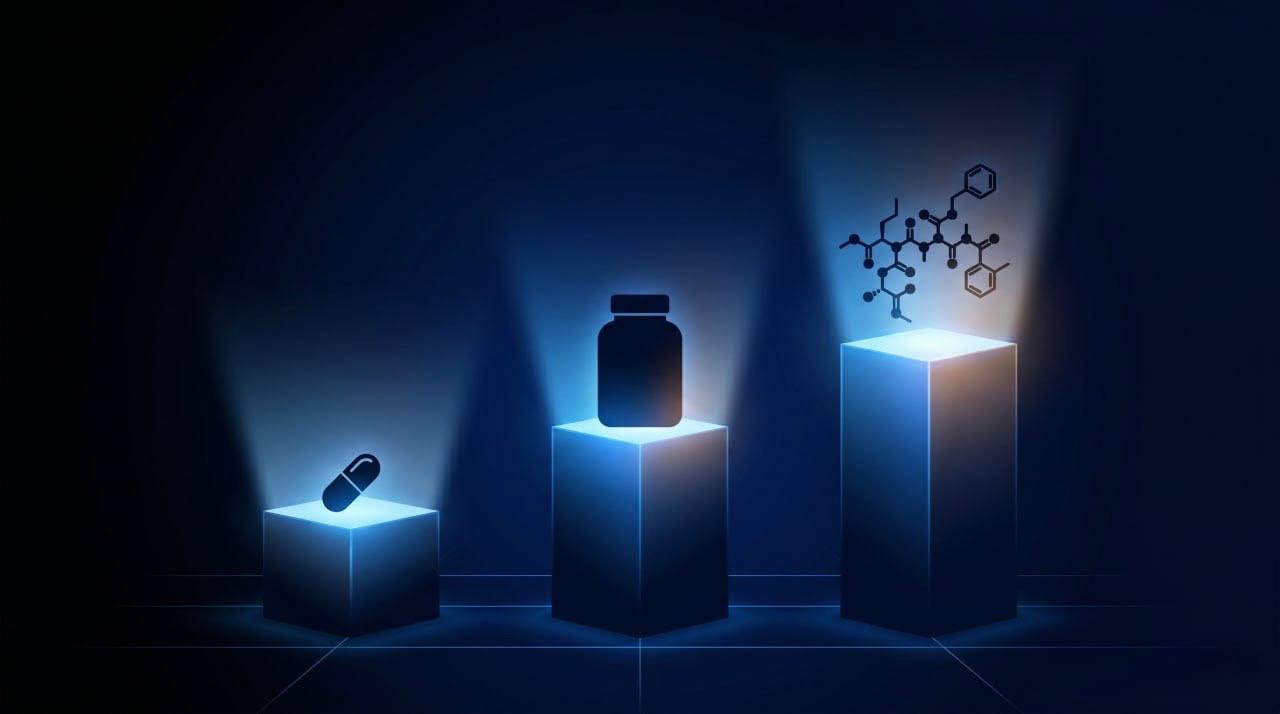
Not all nutra is equally high-risk. Acquirers and gateways generally split the category into three tiers, with very different processing economics:
Tier 1 — Mainstream Vitamins & Sports Nutrition
Vitamin C, multivitamins, whey protein, creatine, branded supplement brands sold through retailers. Some mainstream processors (including, occasionally, Stripe) will accept these — but with reserves and a constant risk of mid-cycle termination if volume scales. Most chargebacks come from auto-ship subscriptions rather than fraud.
Tier 2 — Weight Loss, Nootropics, Pre-Workouts
Where mainstream processors stop. The marketing copy tends to make claims acquirers don't want to underwrite ("lose 20 lbs in 30 days", "cognitive enhancement", "extreme energy"). Even with conservative copy, the chargeback profile pushes most accounts above the 1% Visa threshold within 6-12 months.
Tier 3 — Research Peptides & FDA-Adjacent
Research peptides (BPC-157, TB-500, GHK-Cu, etc.), SARMs, novel longevity compounds, anything that's legal as a research chemical but not approved for human consumption. Almost no traditional processor will touch this tier. Card-to-crypto gateways like Chain2Pay are typically the only viable card-acceptance option.
4. Why Traditional Processors Fail Nutra Merchants
Even when a nutra merchant gets onboarded by a traditional processor, the relationship is structurally fragile. The five common failure modes:
- Mid-cycle termination. Approved at signup, terminated 6-12 months later when volume scales and the risk team re-reviews. Funds frozen for 90-180 days.
- Reserve walls. 5-10% rolling reserve held for 180 days. On $200K/month in continuity billing, that's $100K-$200K of working capital permanently parked.
- Chargeback fee stacking. $25-$50 per chargeback fee on top of the refund. At 3-5% chargeback rates, this is 1-2% of gross revenue paid in fees alone.
- Banned-ingredient retroactive review. Add one new product that hits the acquirer's banned list, and the entire account is terminated — even for transactions on the other 99 products.
- Continuity billing restrictions. Many acquirers will only allow one-time billing, killing the continuity model that makes nutra economics work.
For comparison context, see the same failure-mode dynamics in our CBD payment gateway guide and the broader PayPal alternative for high-risk merchants playbook.
5. How Chain2Pay Fits Nutraceutical Merchants
Chain2Pay's card-to-USDC architecture is structurally well-suited to nutra. Every failure mode listed above is solved by the same architectural choice — removing the merchant account from the loop:
- No mid-cycle termination risk: there's no merchant account for an acquirer to revoke. Settlement goes directly to your Polygon wallet.
- No reserves: 100% of every approved transaction lands in your wallet within minutes.
- No chargeback fees on the merchant side: chargeback liability is absorbed by the acquiring partner. Your wallet has already been credited with USDC.
- Continuity billing supported via fresh-link renewals: each renewal cycle generates a new payment link or REST checkout session, which the customer confirms on a hosted page. Cron-driven for custom stacks, hookable into WooCommerce Subscriptions or WHMCS for plug-and-play renewals.
- Tier 3 product acceptance: research peptides, SARMs, FDA-adjacent compounds are accepted as long as they're legal in the merchant's primary market.
For technical integration steps, see the WooCommerce crypto payment plugin guide and the broader e-commerce integration guide.
6. Handling Continuity / Auto-Ship Billing
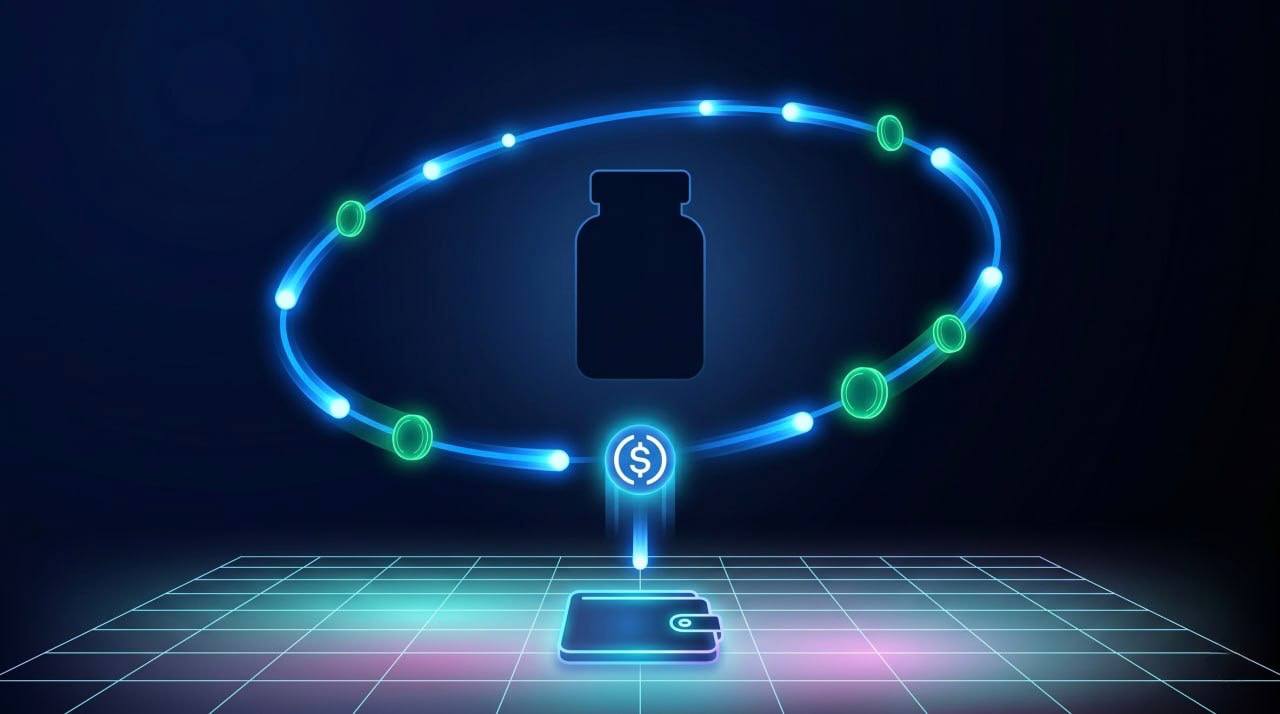
Continuity billing is the lifeblood of nutra economics — and the single biggest failure mode with traditional processors. Chain2Pay handles it via two patterns:
Pattern A — WooCommerce Subscriptions (hooked)
For WooCommerce stores running the WooCommerce Subscriptions extension: hook the renewal action into Chain2Pay's payment-link generator (or the v2 REST API), so every renewal cycle issues a fresh hosted-checkout URL. The customer re-confirms the charge on Chain2Pay's page, the acquiring partner re-authorises the card, and USDC settles to your wallet within minutes. The pattern is closer to a mailed renewal-link than to a silent card-on-file rebill — which actually keeps chargeback ratios lower because every charge is explicitly re-confirmed.
Pattern B — Custom REST API + Cron
For custom storefronts: on each renewal cycle (your cron, your timing), POST to /api/v2/payments with the renewal amount, currency and your callback_url. The response includes a fresh checkout_url you email or text to the customer for one-click re-authorisation. When the order is paid, Chain2Pay fires the merchant callback to your URL — verify the x-chain2pay-signature header, then mark the subscription as renewed.
Chargeback & Refund Handling
For continuity-billing chargebacks, Chain2Pay's flow is: the cardholder disputes, the acquiring partner absorbs the fiat liability, your USDC settlement is unaffected. Refunds (when you initiate them) are processed off-chain via the acquiring partner — cardholder gets fiat back to their original card. See more in our chargeback prevention guide.
7. Frequently Asked Questions
Why are nutraceutical and supplement merchants classified as high-risk?
Three reasons: chargeback ratios are structurally elevated due to continuity / auto-ship billing models, FDA classification ambiguity at the acquirer level, and historical fraud in the weight-loss / nootropic / peptide categories triggered industry-wide processor pull-back.
Will Stripe and PayPal accept supplement merchants?
For most supplement categories, no. Stripe explicitly prohibits 'pseudo-pharmaceuticals' and most weight-loss products. PayPal restricts continuity billing and most peptide-related products. Even when you get approved, account terminations within 12-24 months are the norm for high-volume supplement stores.
What about peptide-specific payment gateways?
Peptides occupy a particularly difficult niche — research peptides for laboratory use are legal in most jurisdictions but not approved for human consumption, which traditional acquirers treat as a hard 'no'. Chain2Pay's card-to-USDC gateway accepts research-peptide merchants because the merchant-account layer is removed from the equation entirely.
How does Chain2Pay handle continuity / auto-ship billing for supplements?
Each renewal generates a fresh hosted payment link or REST checkout session that the customer re-confirms on Chain2Pay's page. The flow can be cron-driven from your custom stack, or hooked into WooCommerce Subscriptions / WHMCS renewals. USDC arrives in your wallet within minutes of approval — no rolling reserve, no continuity-billing penalty pricing, no merchant account that can be terminated mid-cycle.
What's the chargeback rate I should expect for supplement / peptide stores?
Industry baseline is 2-4% for continuity-billing supplements, 3-6% for weight-loss / peptide products. Chain2Pay's settlement is non-reversible on the merchant side — chargebacks are absorbed by the acquiring partner, not the merchant.
Are peptides and supplements legal to sell internationally with this gateway?
Legality depends on the specific compound and jurisdiction. Chain2Pay does not provide legal advice — but we accept merchants whose products are legal in their primary markets. Compliance with shipping/customs/labeling rules in destination countries is the merchant's responsibility.
8. Conclusion
Nutraceutical merchants have spent a decade choosing between bad options: traditional processors that approve at signup and terminate at scale, offshore acquirers that charge 8-12% all-in, or crypto-only gateways that gut conversion by 95% because customers don't already hold crypto.
Card-to-USDC settlement is the structural answer to all three. The customer experience stays mainstream (Visa, Mastercard, Apple Pay, Google Pay). The merchant-account fragility disappears. The chargeback liability stops landing on your wallet. And the continuity-billing model that makes nutra economics work is supported natively, not artificially restricted by a risk team.
For supplement stores, peptide retailers, vitamin brands and FDA-adjacent merchants, Chain2Pay is the cleanest 2026 architecture for accepting cards without depending on a merchant account someone else can revoke.